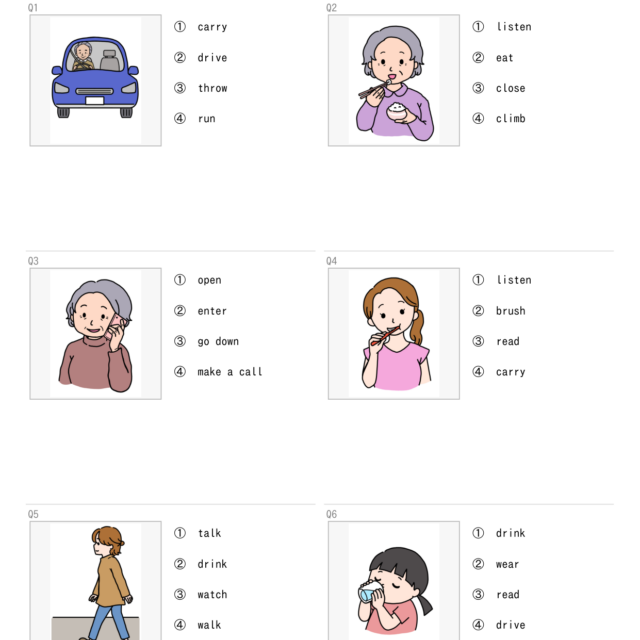
- Verb Worksheets for Aphasia — Organised by Task Type
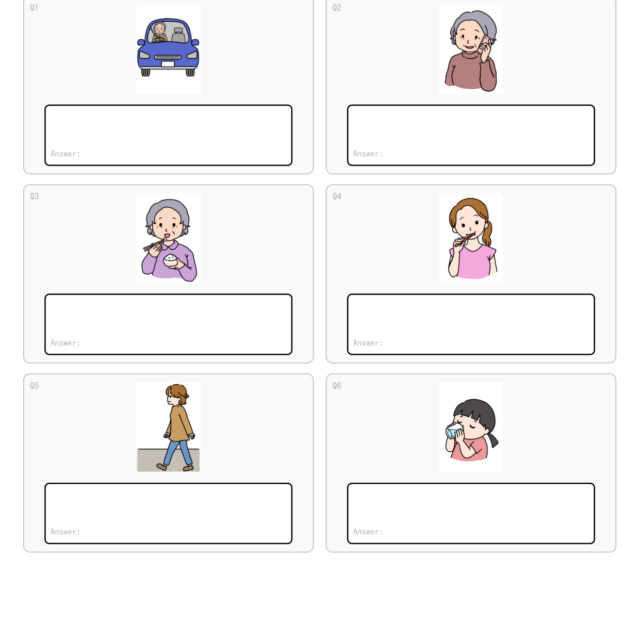
- Choose the verb that matches the picture
- Selecting the verb that matches the picture, from 3 options (5 sheets)
- Selecting the verb that matches the picture, 6/6 (5 sheets)
- Selecting the verb that matches the picture, 6/9 (5 sheets)
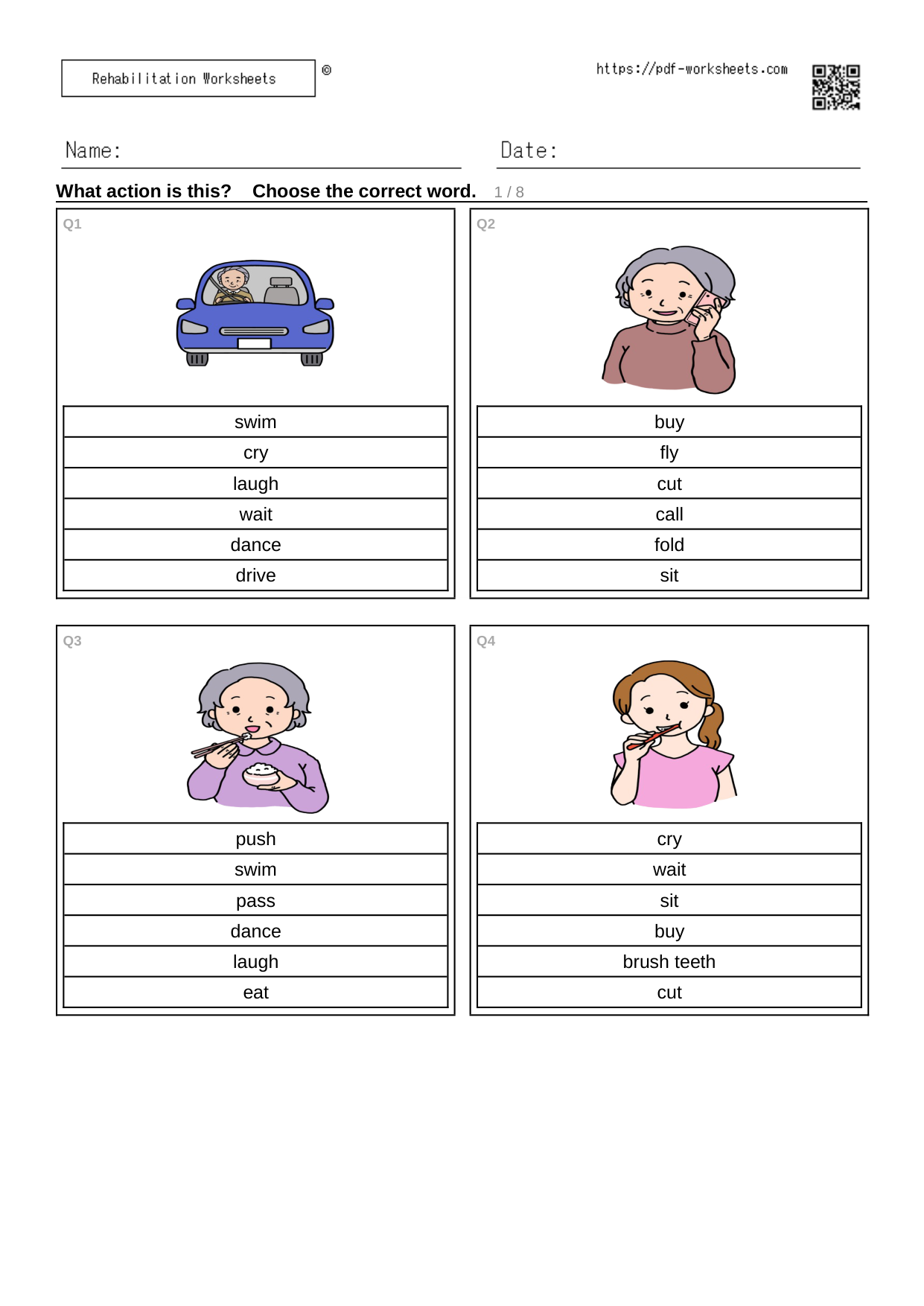
- Choose the verb for the action shown, 6 choices (8 sheets)
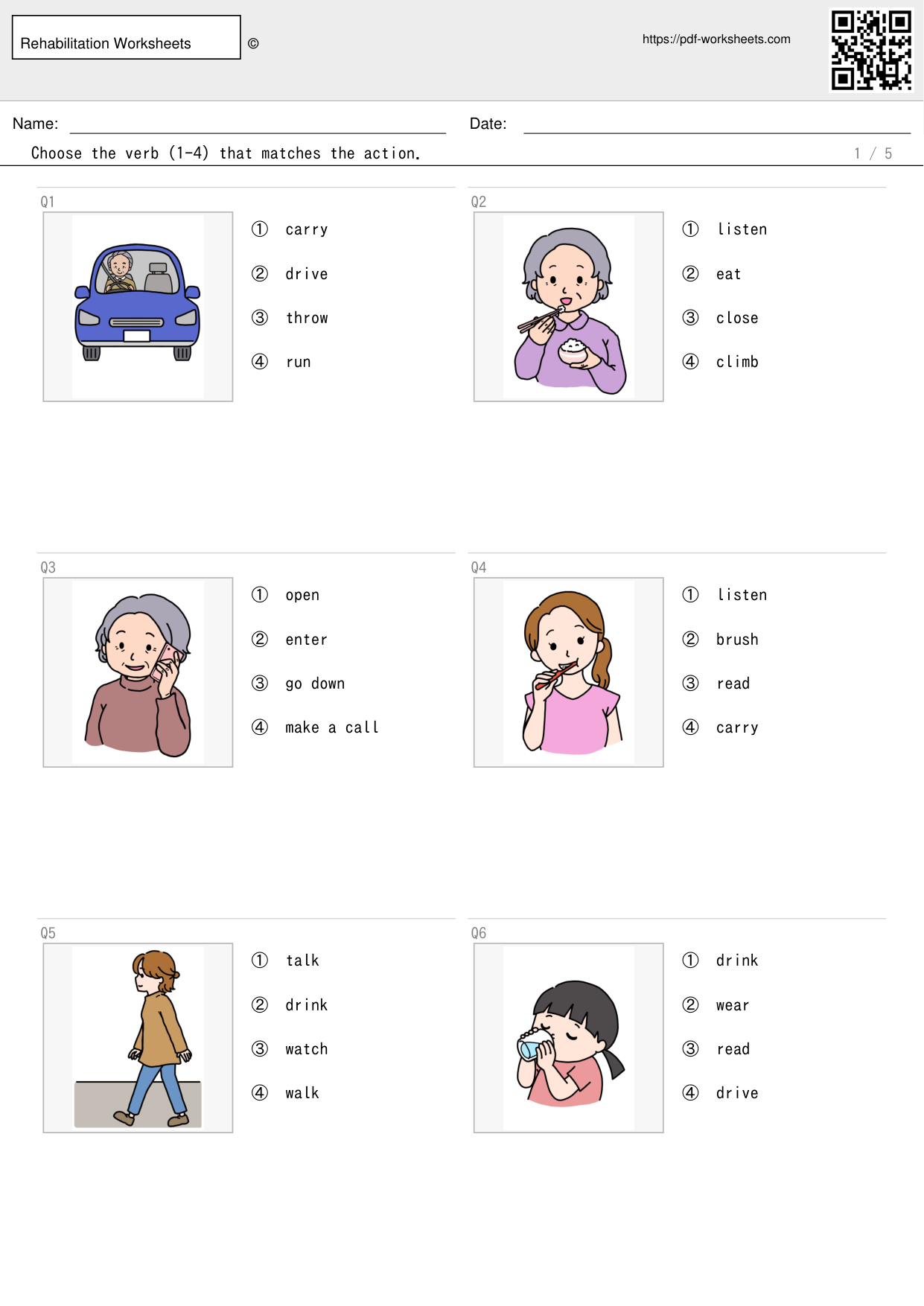
- Task to look at the picture and choose the verb that matches the action, 4 choices (5 sheets)
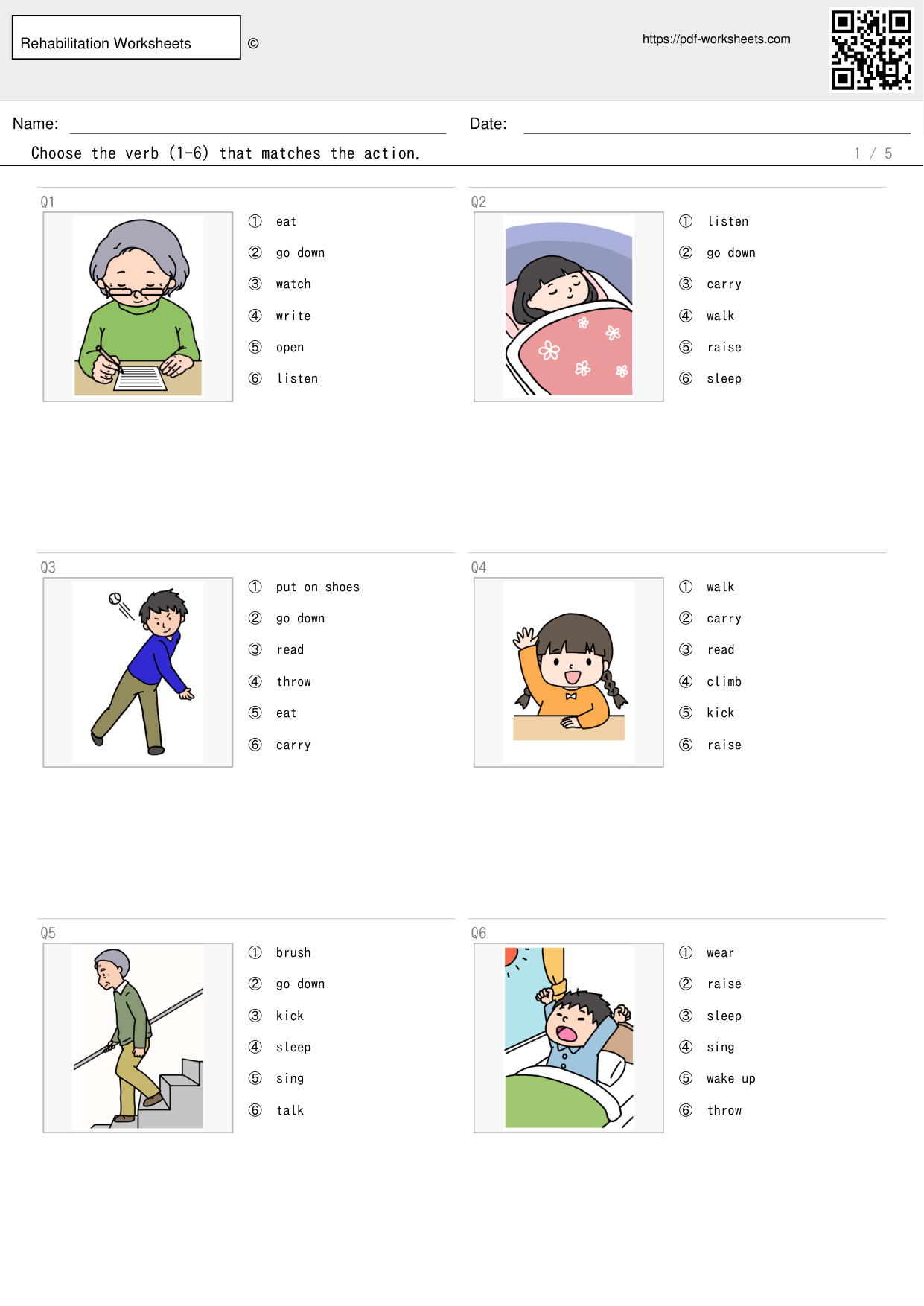
- Task to look at the picture and choose the verb that matches the action, 6 choices (5 sheets)
- Choose the verb that fits the sentence
- Choose the verb that matches a sound or manner word
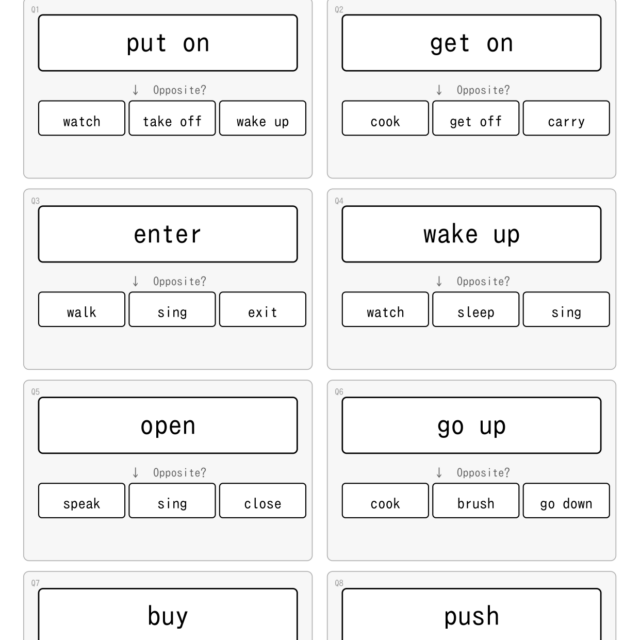
- Choose the opposite verb
- Read a sentence and choose the matching picture
- Match pictures with verbs
- Match objects with verbs
- Write the verb
- Think of the verb that completes the sentence
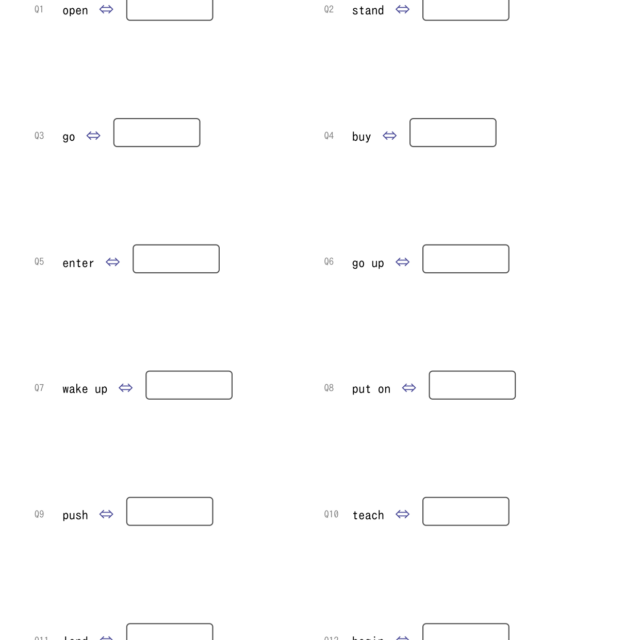
- Write the opposite verb
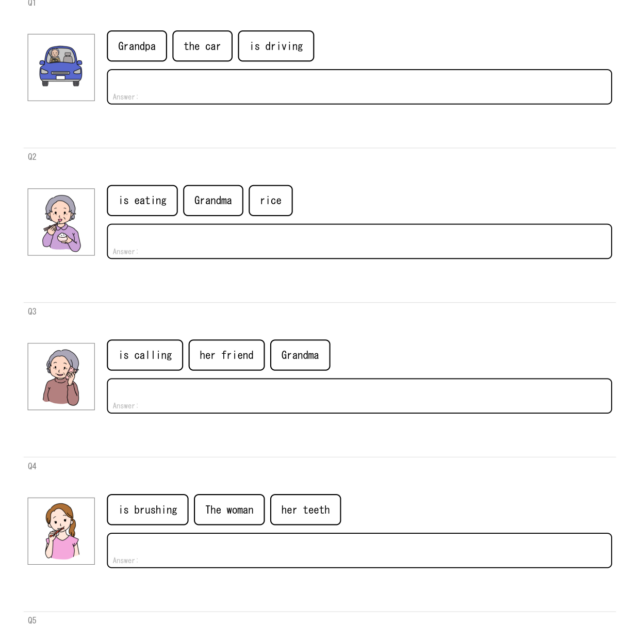
- Write a sentence for the picture
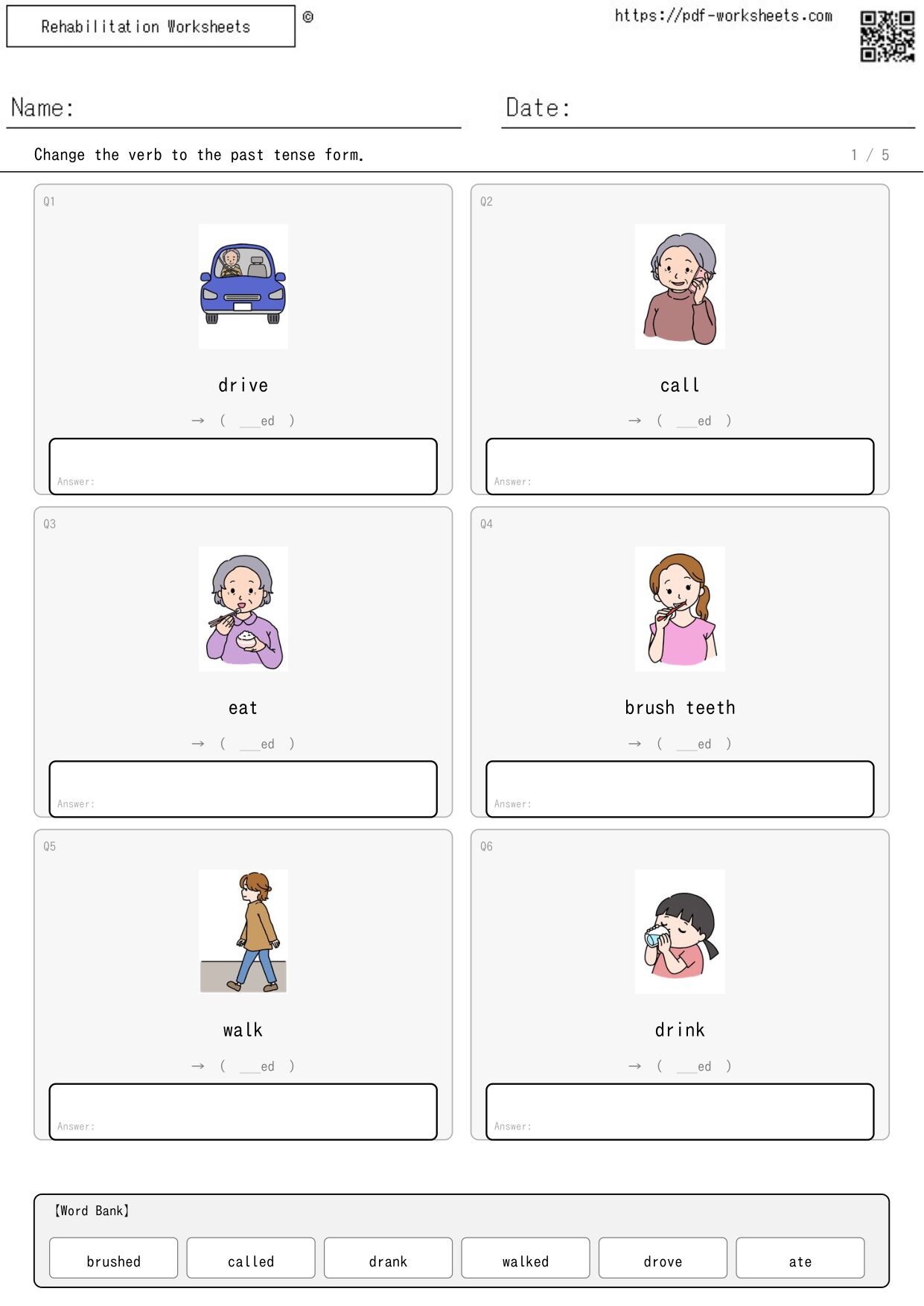
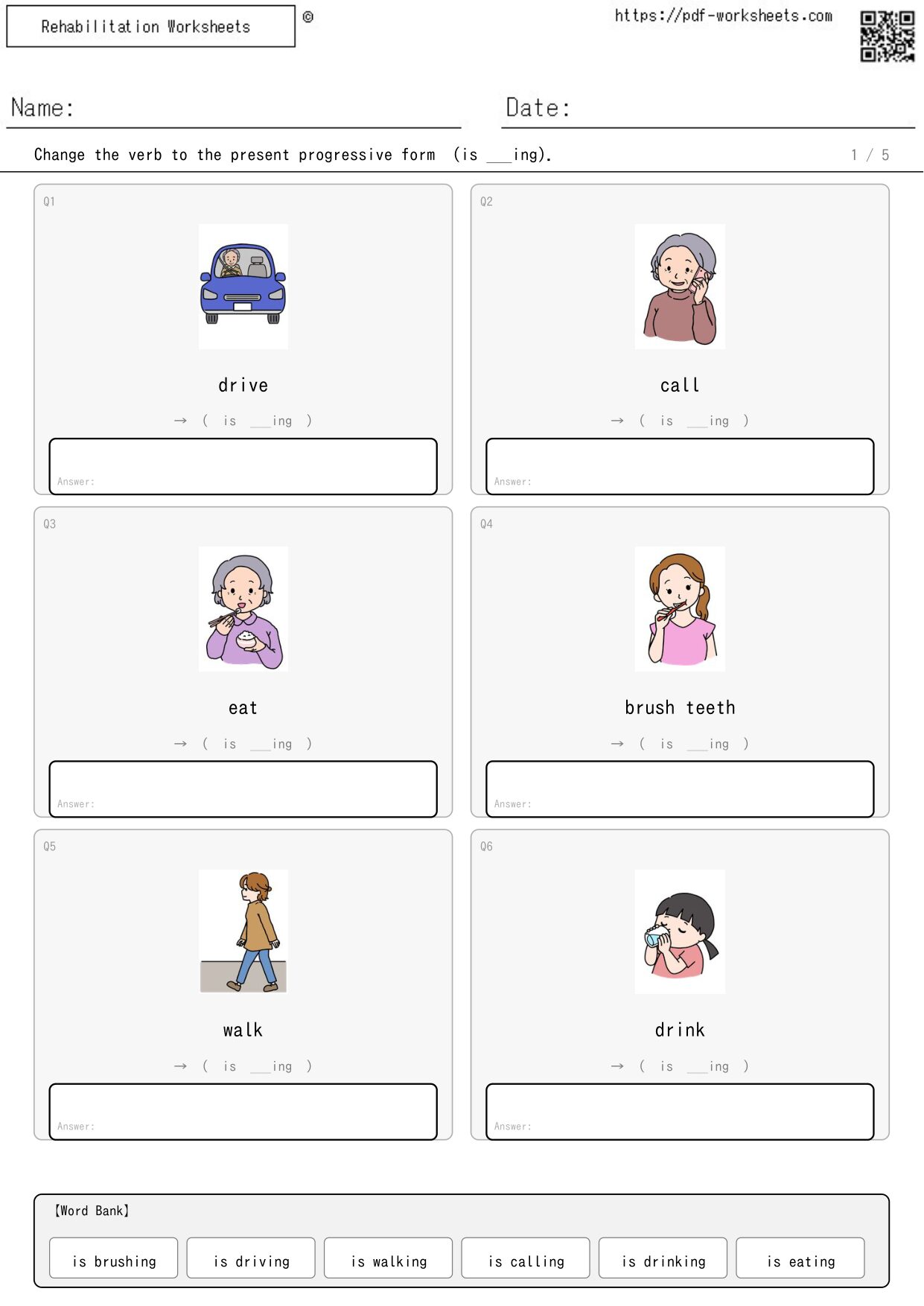
- Change the form of the verb
Verb Worksheets for Aphasia — Organised by Task Type
On “Rehabilitation Worksheets,” you will find printable materials for aphasia rehabilitation. For every worksheet listed here, only the first sheet is free to download; a premium membership unlocks the rest.
This page gathers our verb (action word) worksheets, grouped by what the task asks the reader to do: choose, match, write, or change the form.
Why verb practice matters
In aphasia, action words are often harder to retrieve than the names of objects. Verbs form the backbone of a sentence: once “eat” or “go” comes to mind, it opens the way to “eat a meal” or “go to the hospital.” Practising verbs is an important bridge from single words to sentences.
Where to start
Broadly, the demand increases in this order: choosing → matching → writing. Begin with choosing from options to confirm that action words are understood, then move on to writing. Changing the form of a verb sits comfortably later, once verbs are coming to mind readily.
Who these worksheets are for
- Speech-language therapy (ST) sessions for aphasia
- Home practice and self-training
- Language activities at day-care and care facilities
- A shared activity with family to spark conversation
How to use them effectively
Look at the picture and try saying the word aloud first. Once it comes to mind, choose or write it. Verbs are often easier to recall alongside an object — “eat a meal” rather than “eat” on its own. A few questions a day, at a comfortable pace, works best.
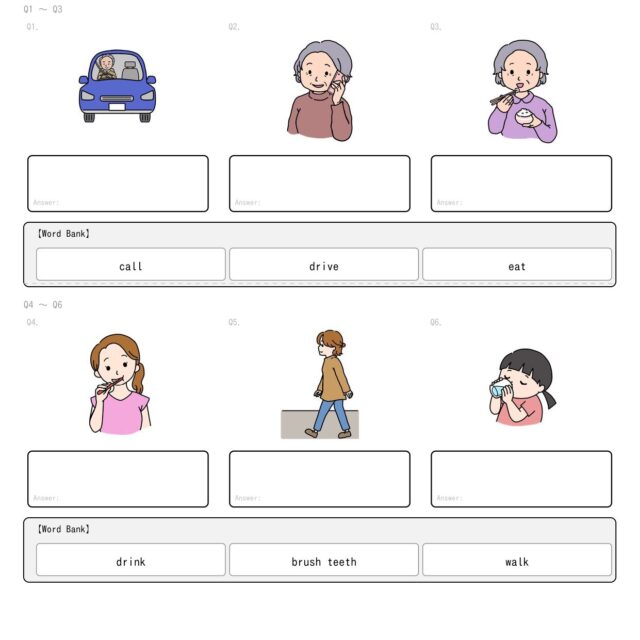
Choose the verb that matches the picture
Look at the picture and choose the action word from a word bank. There is no writing involved, so it is a good way to confirm that action words are understood. The larger the word bank, the harder the task.
Selecting the verb that matches the picture, from 3 options (5 sheets)
Selecting the verb that matches the picture, 6/6 (5 sheets)
Selecting the verb that matches the picture, 6/9 (5 sheets)
Choose the verb for the action shown, 6 choices (8 sheets)
Task to look at the picture and choose the verb that matches the action, 4 choices (5 sheets)
Task to look at the picture and choose the verb that matches the action, 6 choices (5 sheets)
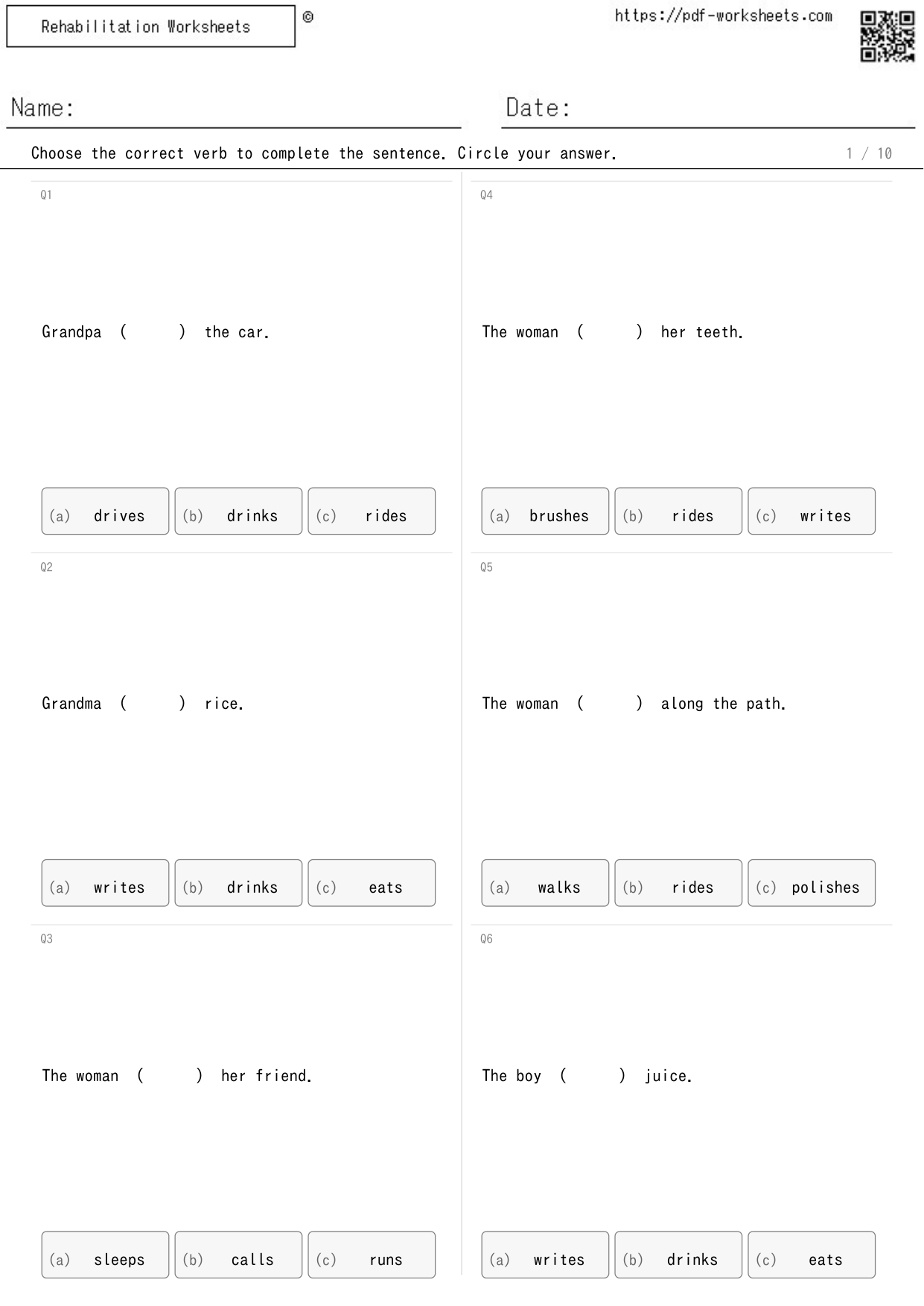
Choose the verb that fits the sentence
Fill the gap in a sentence such as “Grandpa ( ) the car.” This goes a step beyond looking only at a picture, drawing on the meaning of the whole sentence.
Choose the verb that fits the sentence (10 sheets)
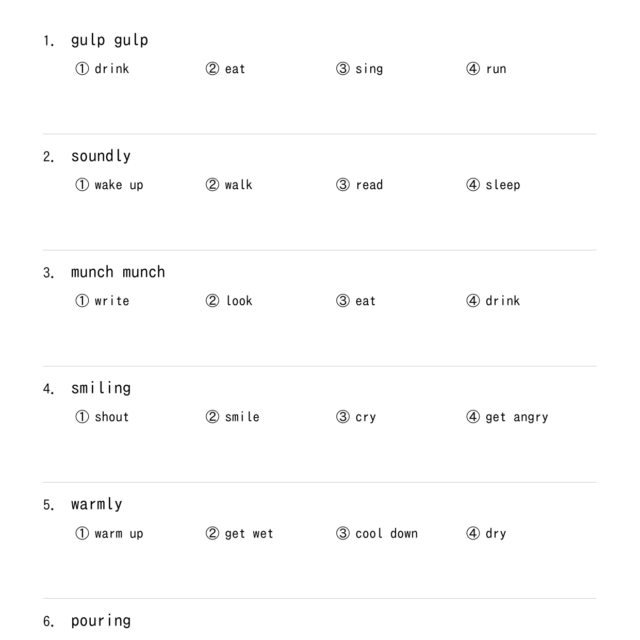
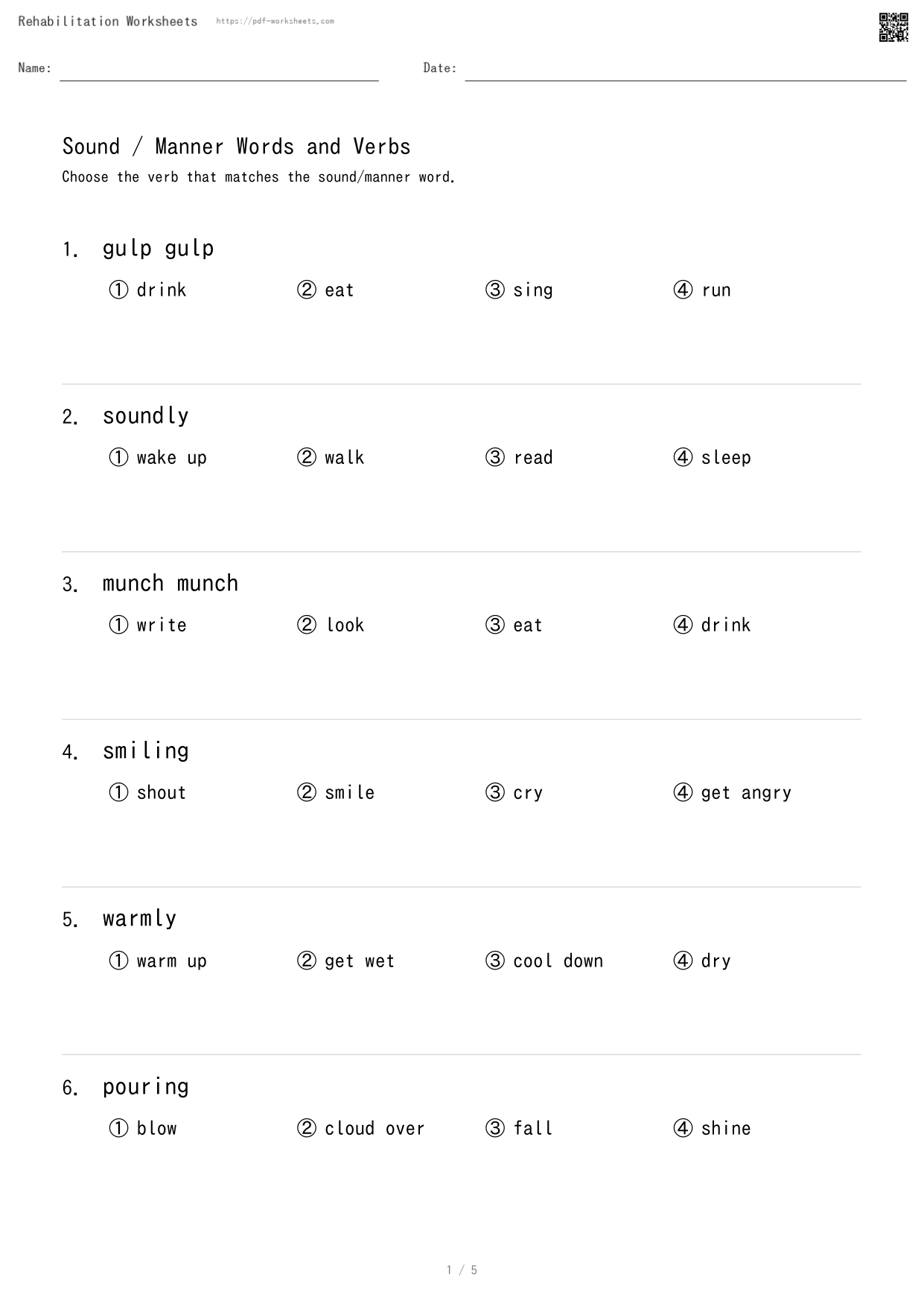
Choose the verb that matches a sound or manner word
Read a word that describes a sound or a way of moving, then choose the verb that goes with it from four options. It links the feel of an action with the word for it.
Task to choose the verb that matches the sound or manner word, 4 choices (5 sheets)
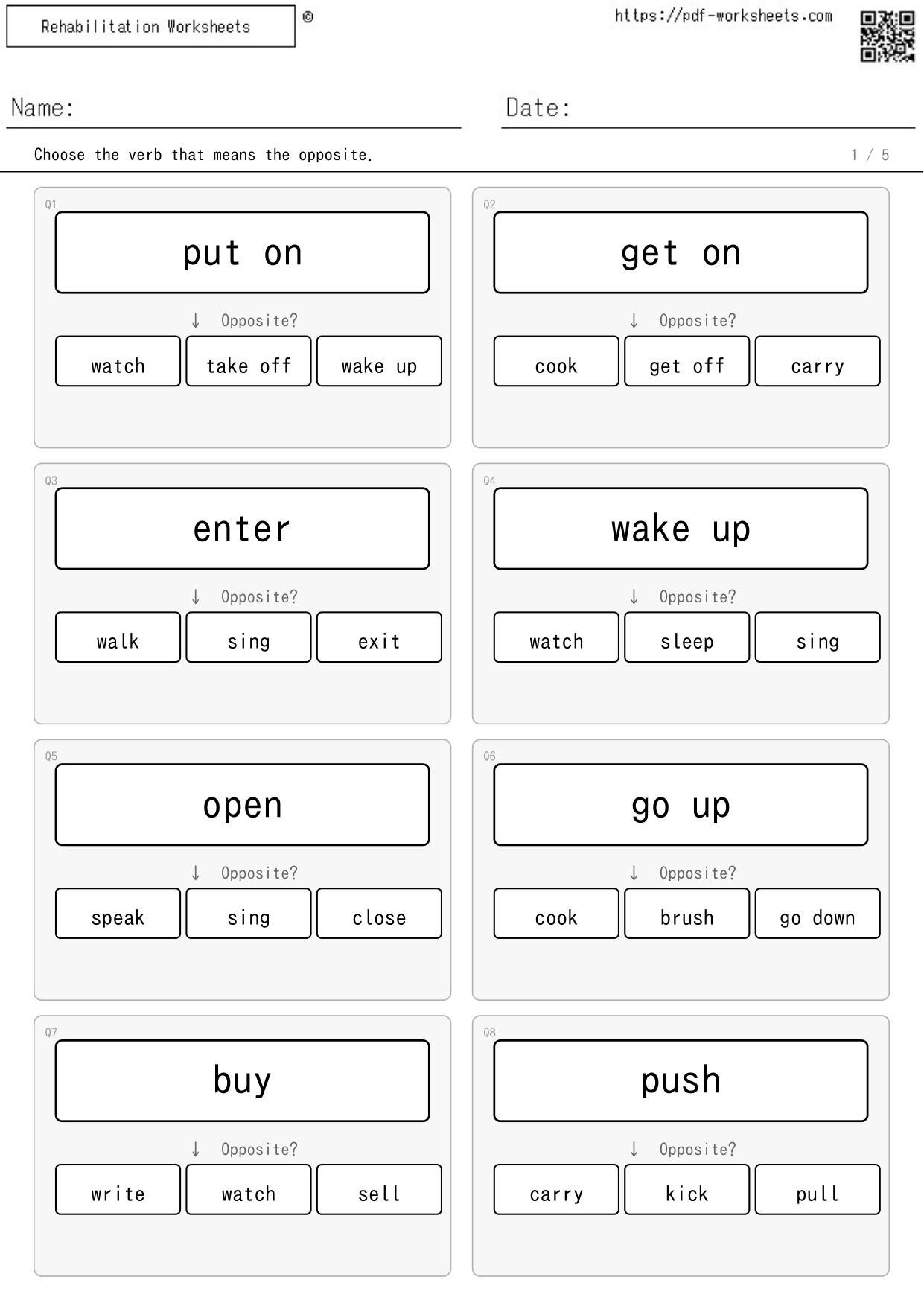
Choose the opposite verb
Choose the verb that means the opposite, such as “put on” and “take off,” from three options. It draws attention to how words relate to each other in meaning.
Task to choose the verb that means the opposite, 3 choices (5 sheets)
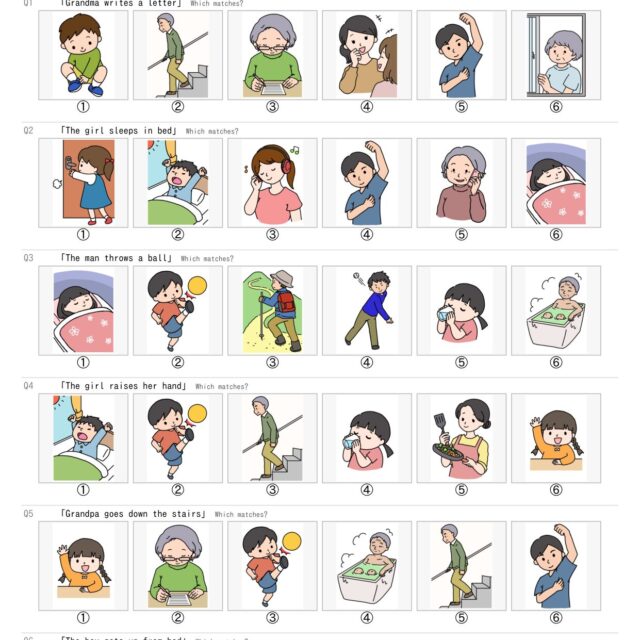
Read a sentence and choose the matching picture
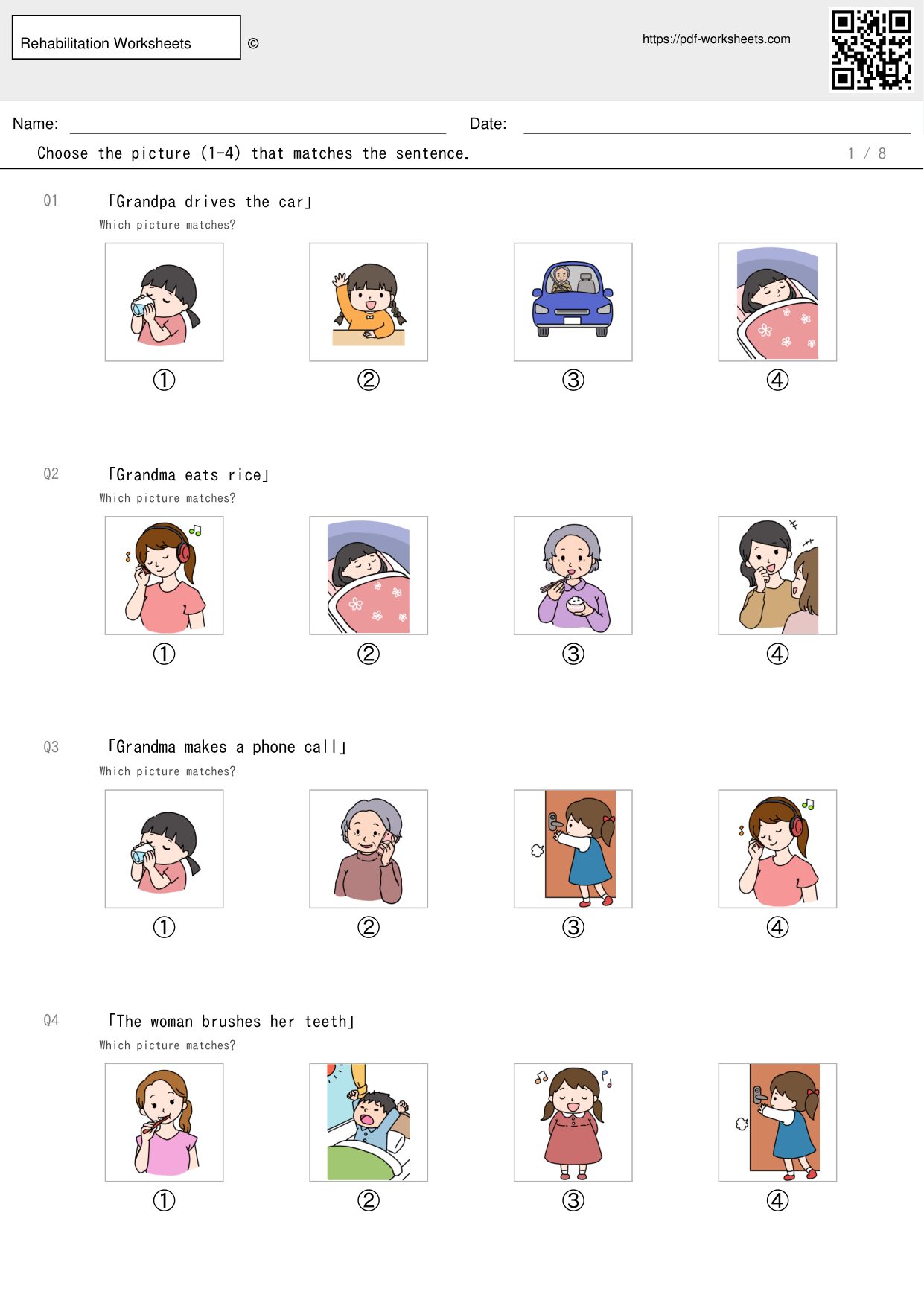
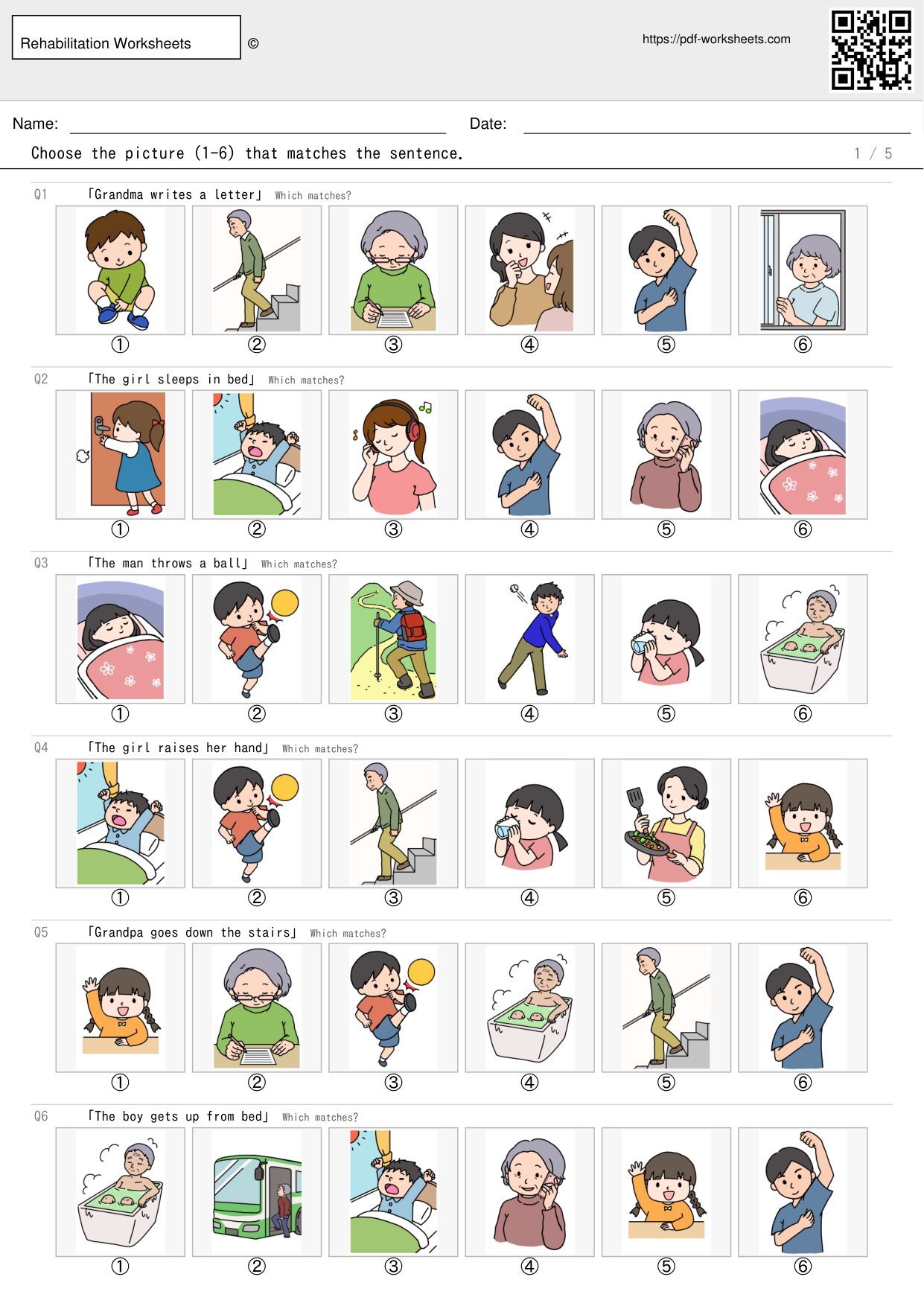
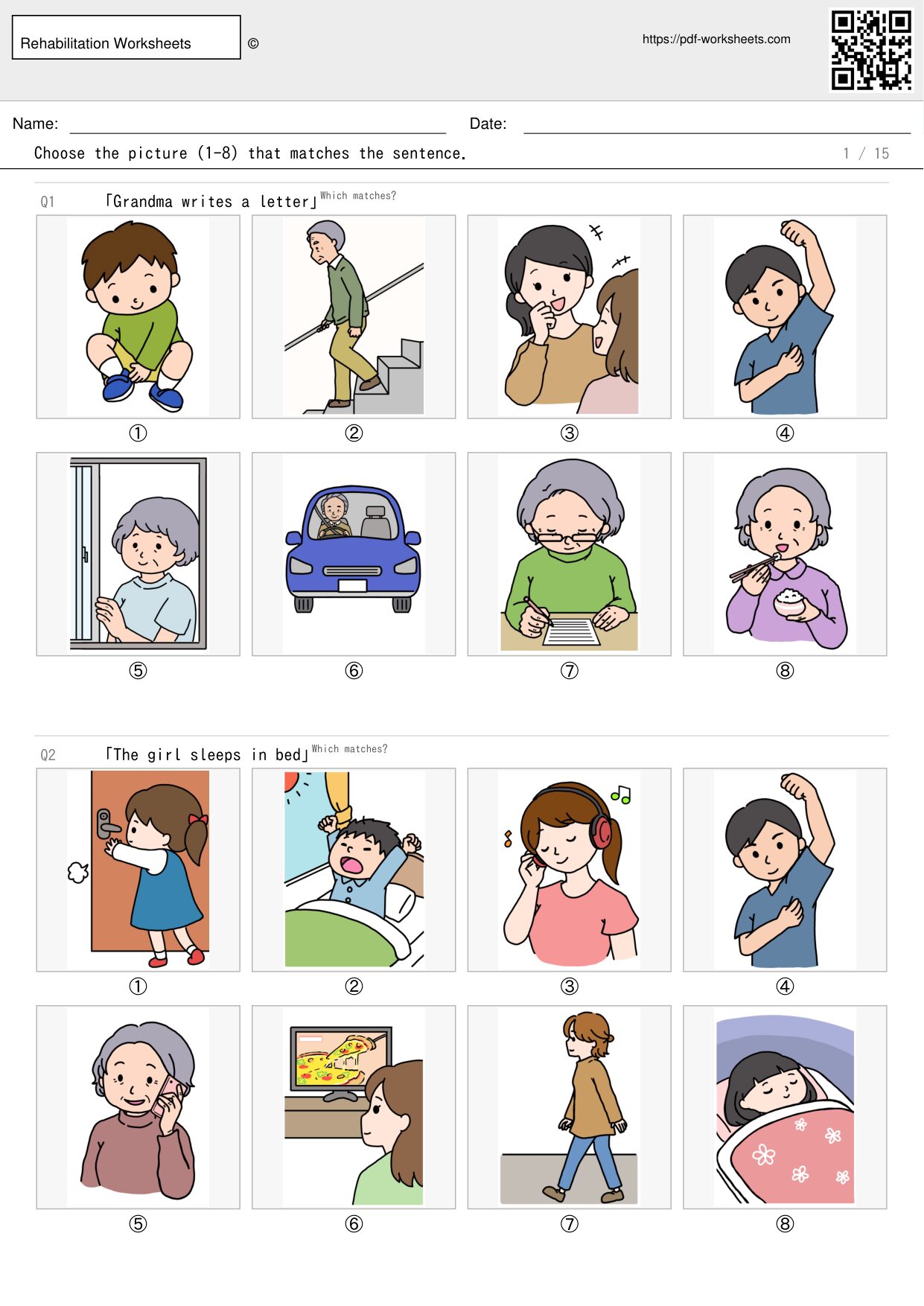
Read a short sentence and choose the picture that shows it. This checks whether a sentence built around a verb is understood. As the choices grow from three to eight, smaller differences between pictures need to be noticed.
Task to choose the picture that matches the sentence, 3 choices (8 sheets)
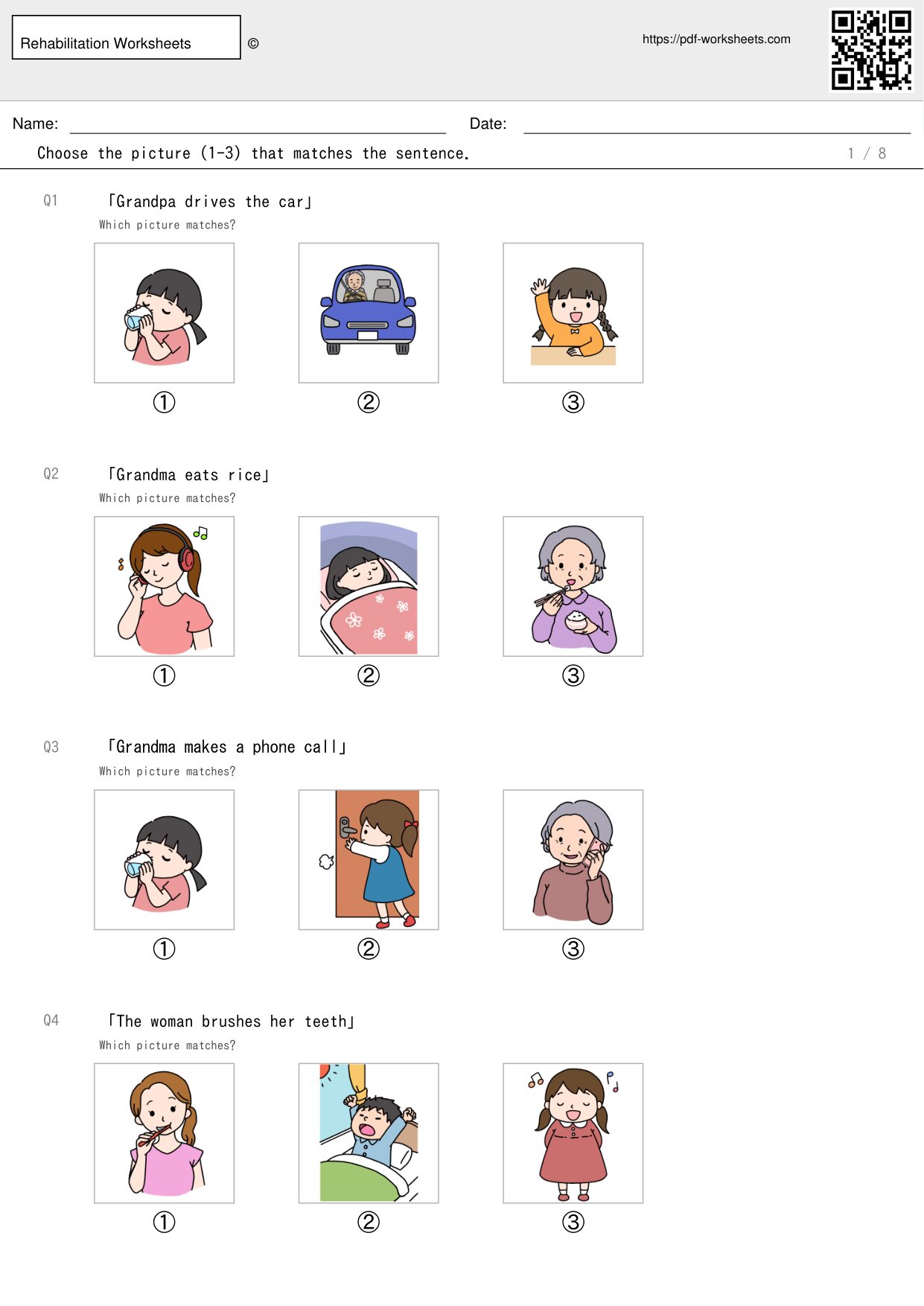
Task to choose the picture that matches the sentence, 4 choices (8 sheets)
Task to choose the picture that matches the sentence, 6 choices (5 sheets)
Task to choose the picture that matches the sentence, 8 choices (15 sheets)
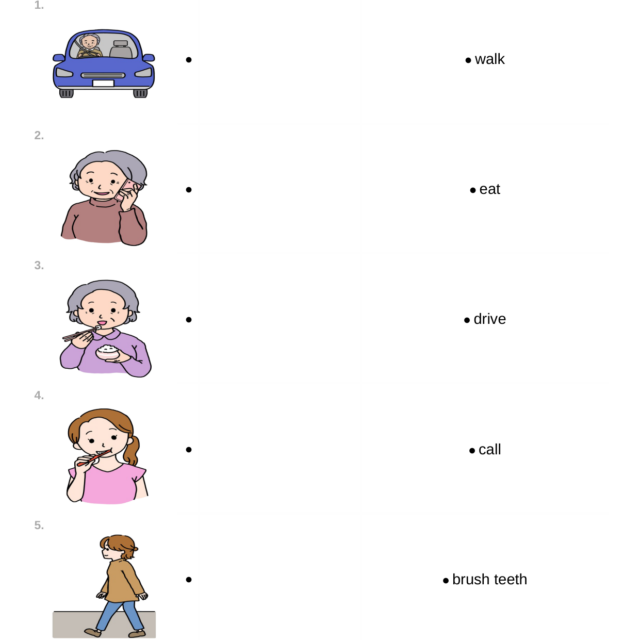
Match pictures with verbs
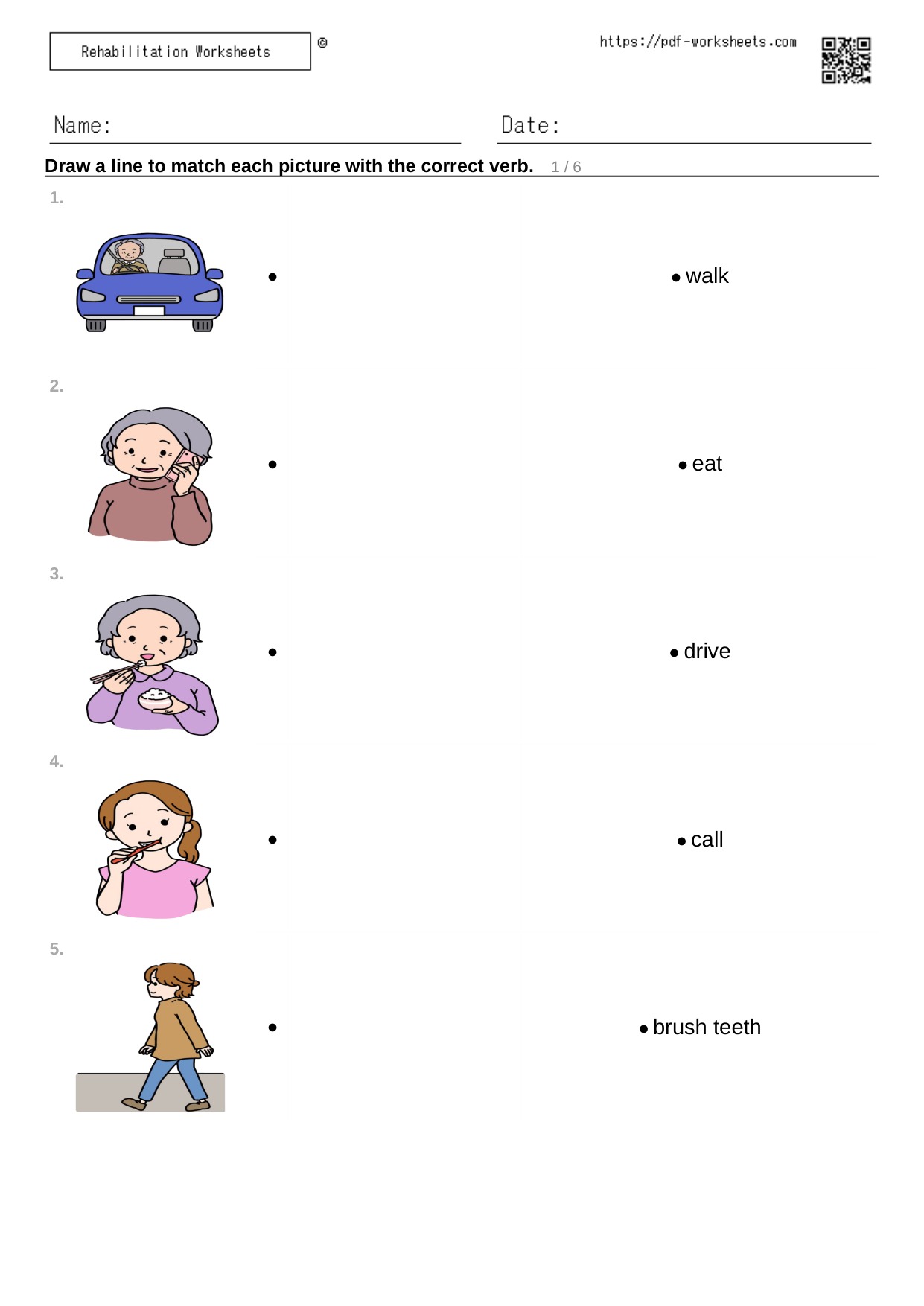
Several pictures and words appear on the same page, to be linked by lines. Compared with choosing one answer at a time, this asks the reader to hold several items in mind at once.
Draw lines matching pictures with verbs (5 sheets)
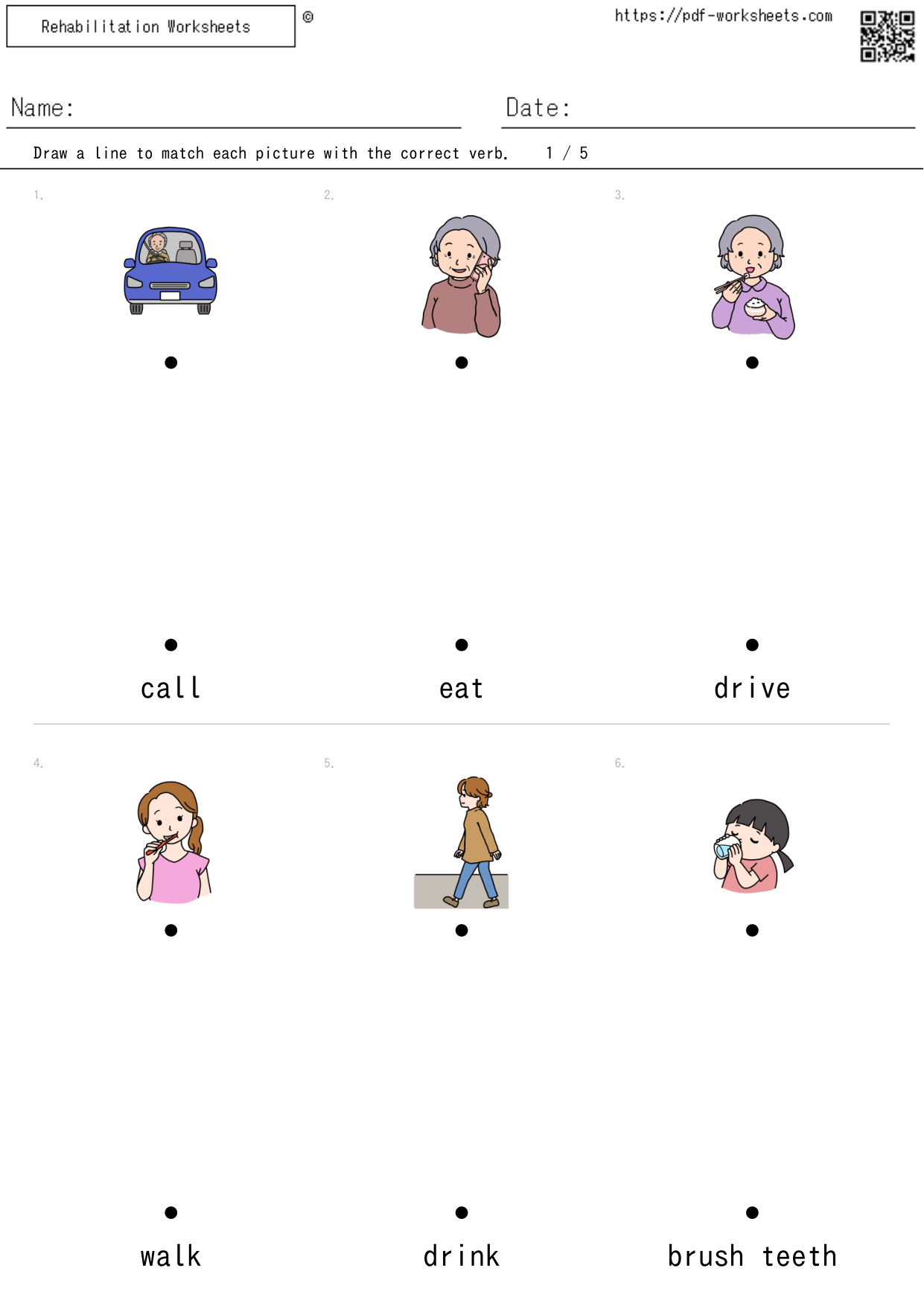
Draw lines matching pictures with verbs, side by side (6 sheets)
Match objects with verbs
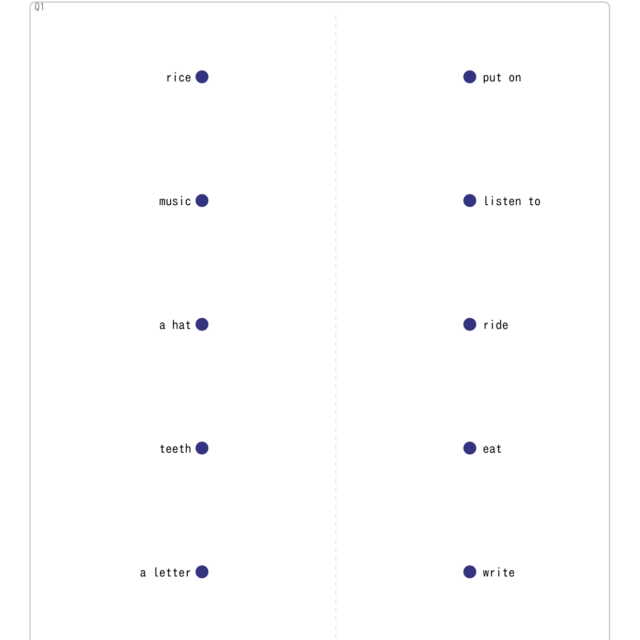
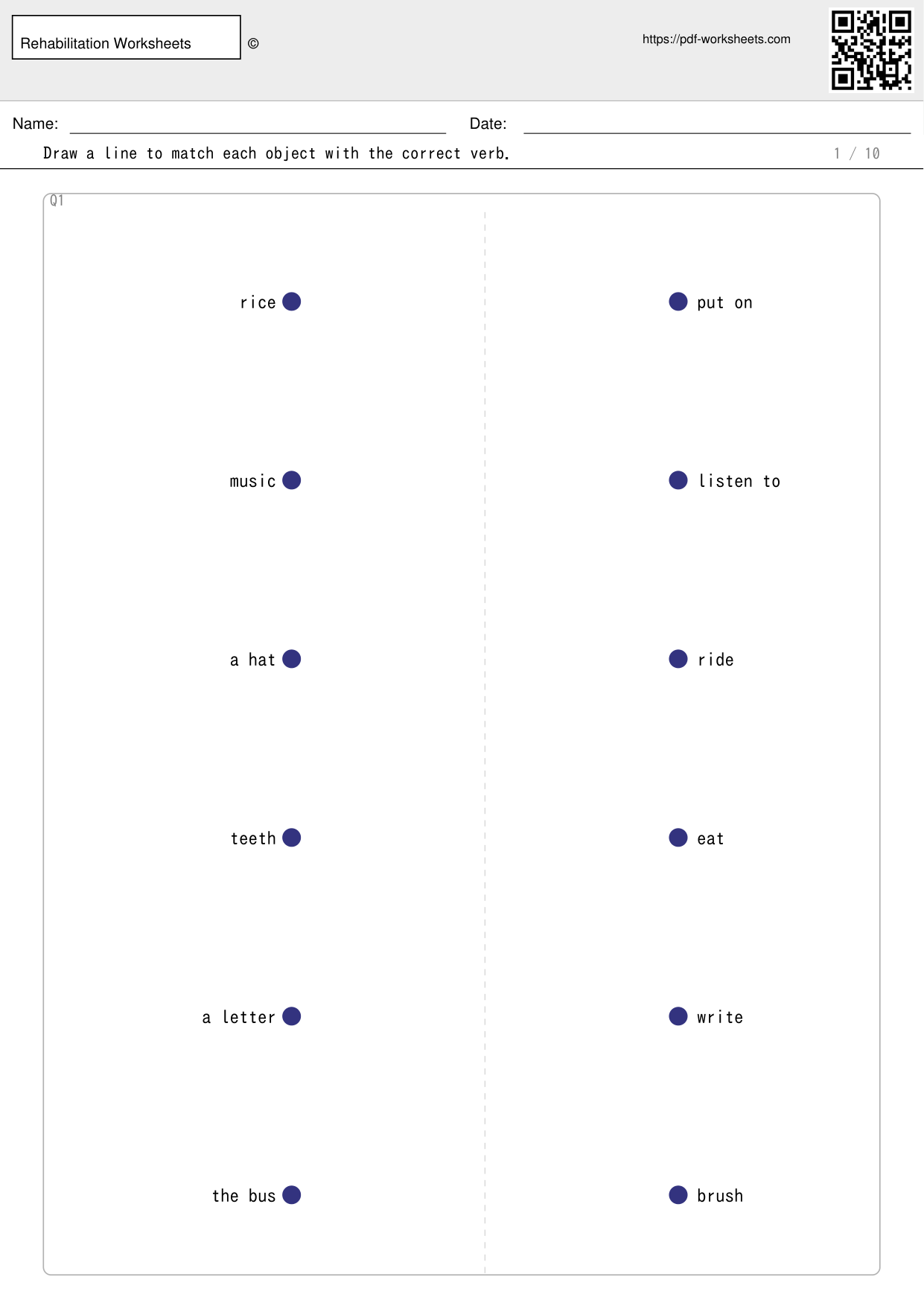
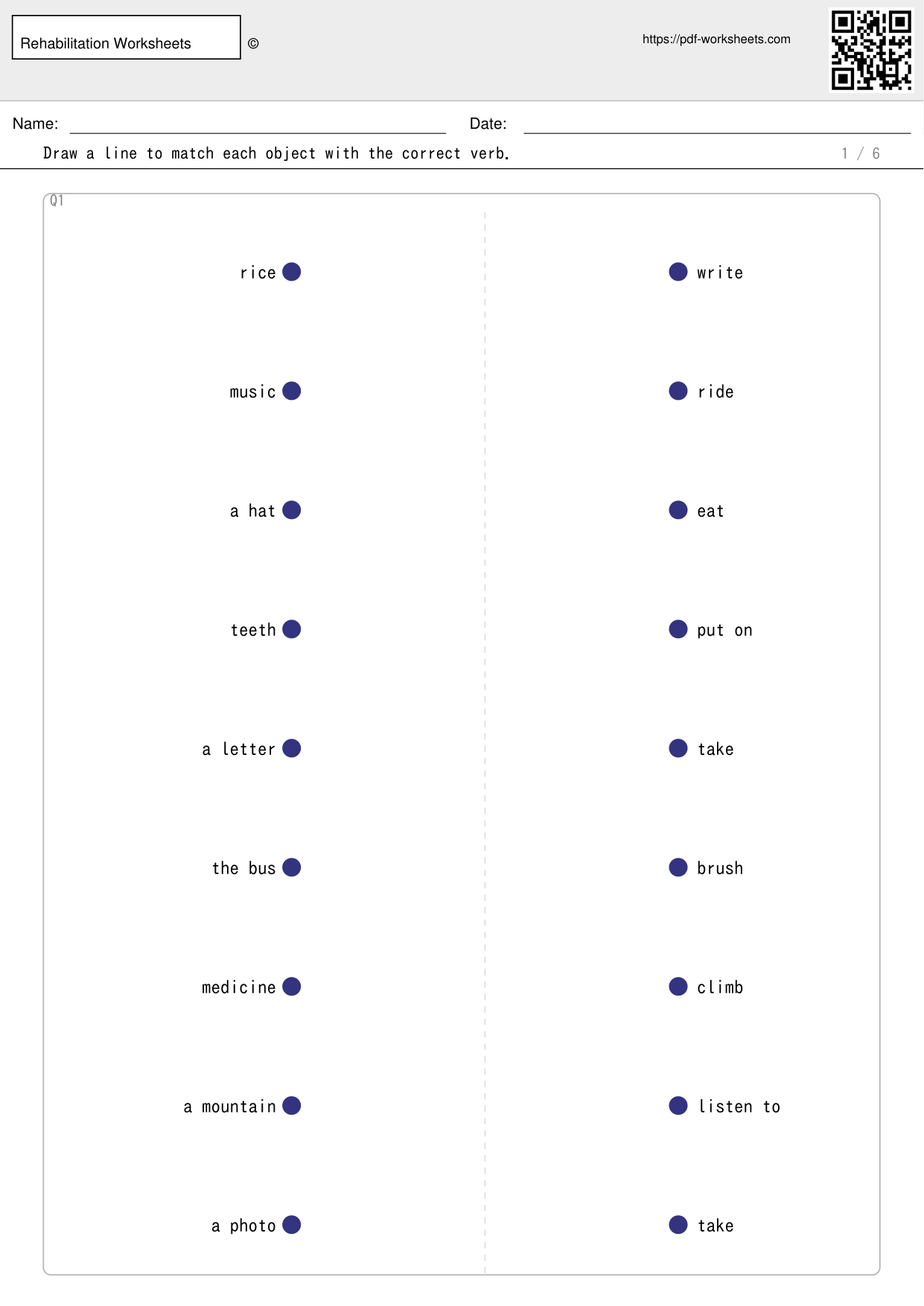
Link an object with the verb that goes with it, such as “rice” and “eat.” No pictures are used here: the connection has to be judged from the words alone. The more pairs on a page, the harder it becomes.
Match objects with verbs, 3 pairs (10 sheets)
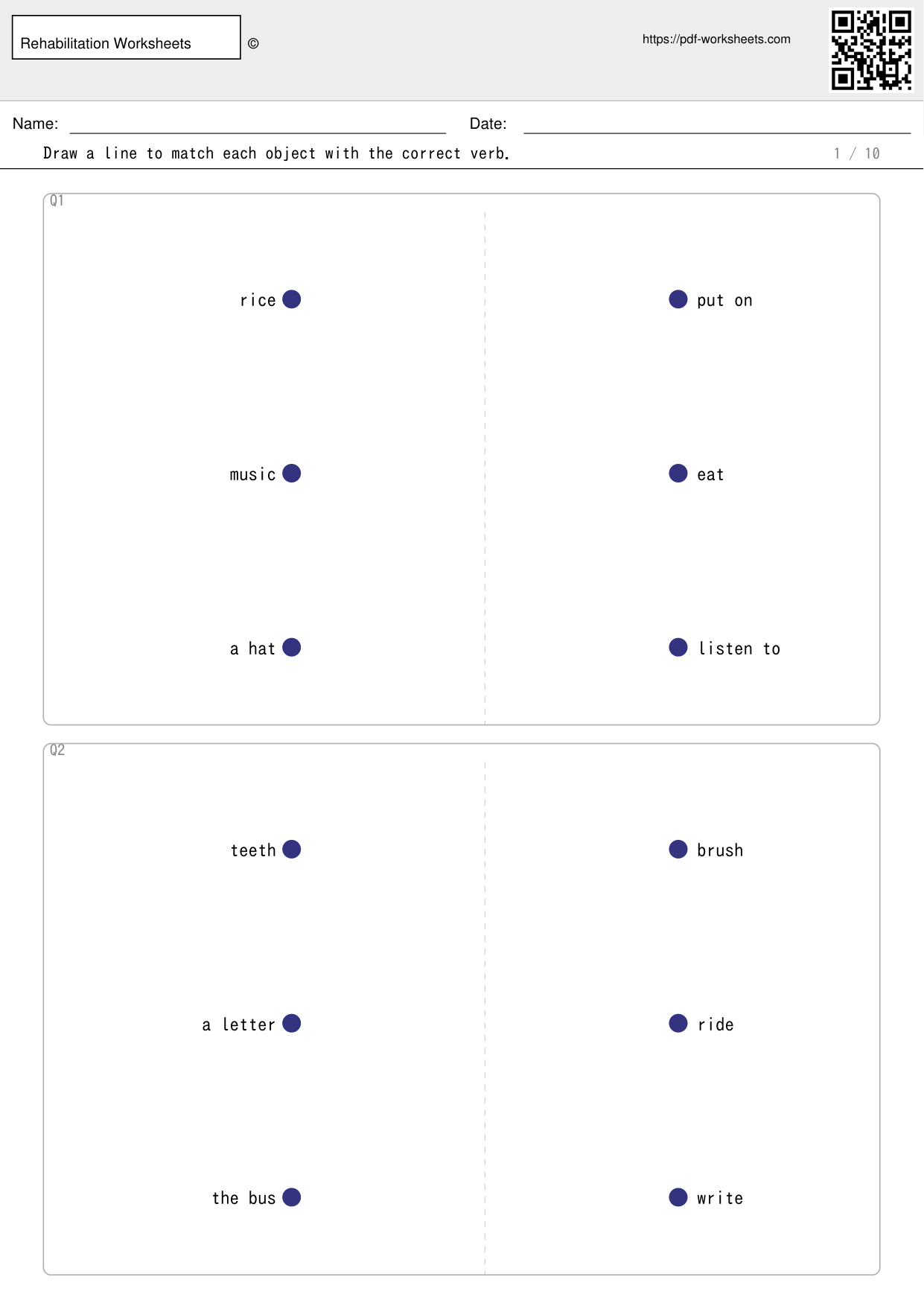
Match objects with verbs, 6 pairs (10 sheets)
Match objects with verbs, 9 pairs (6 sheets)
Write the verb
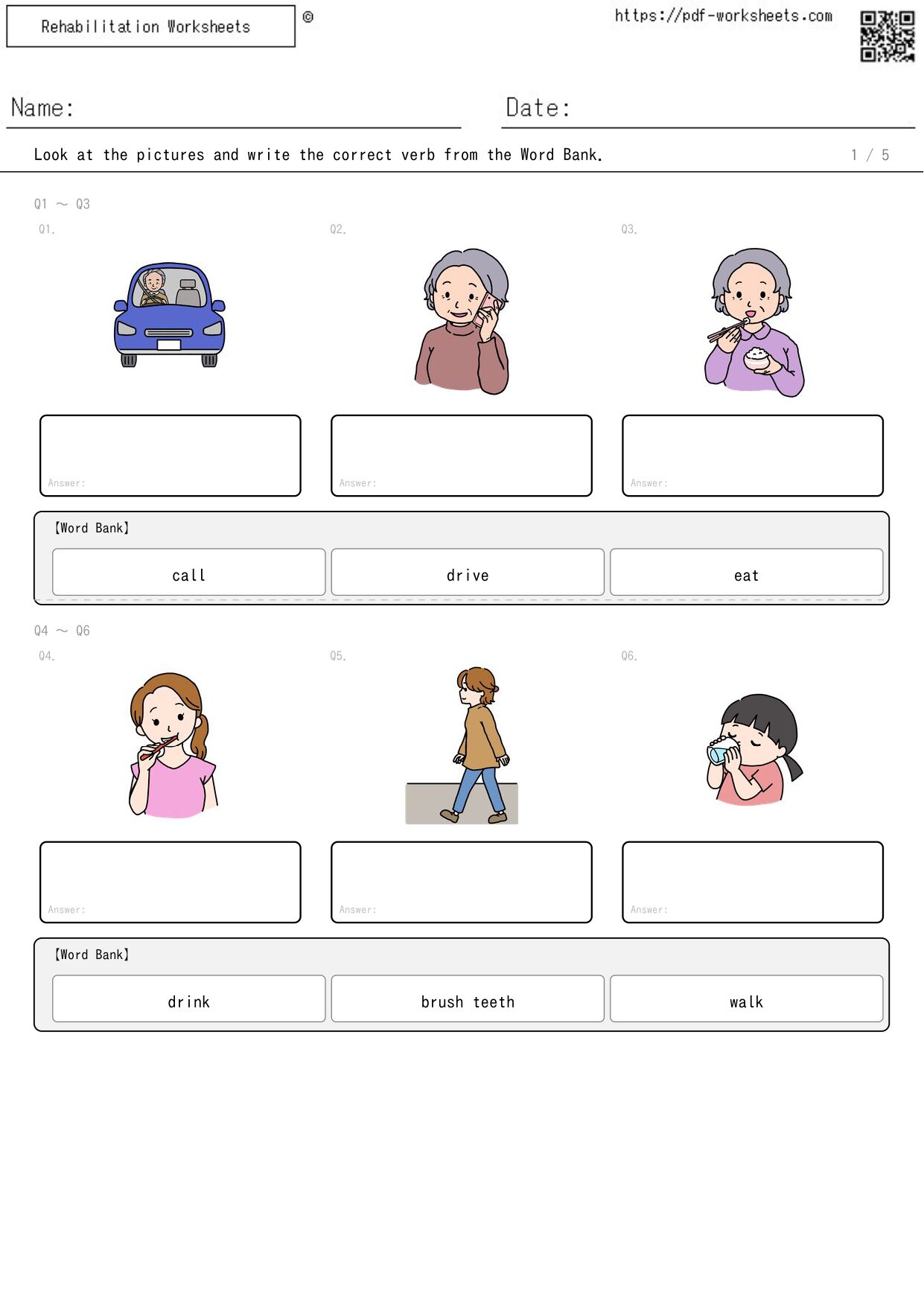
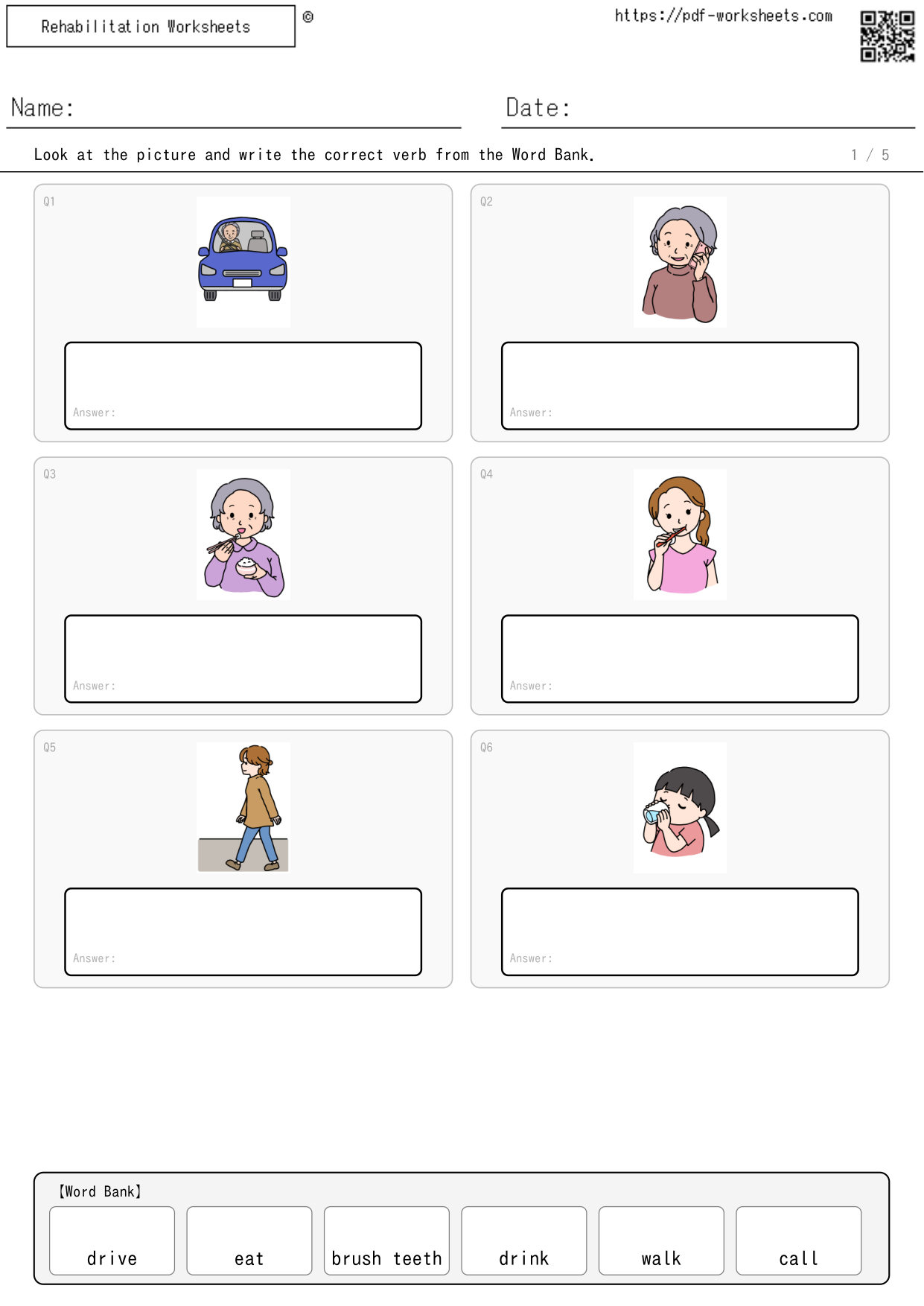
Rather than choosing, the reader recalls and writes the verb. Within the verb series this is the final step.
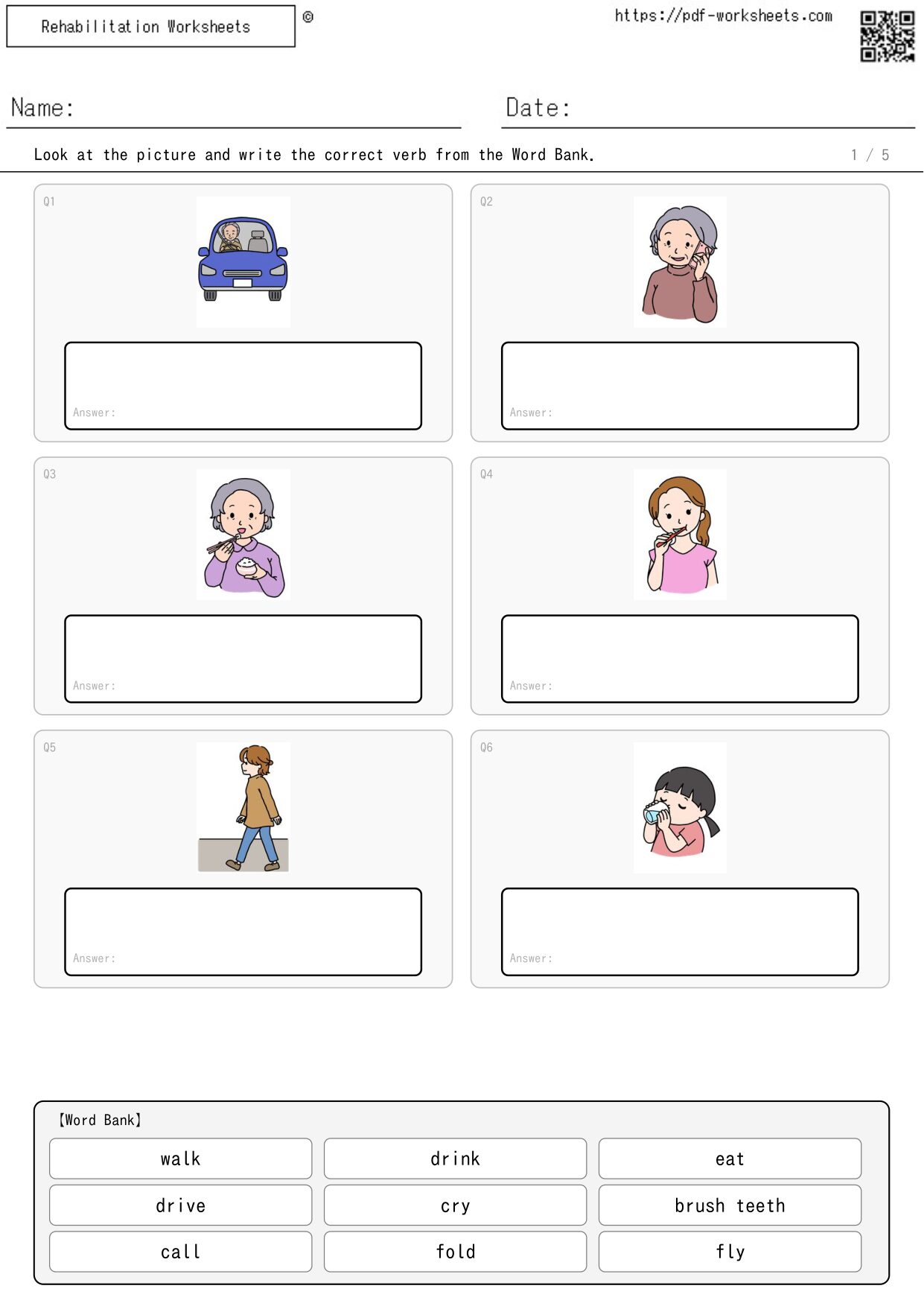
Look at a picture and write the correct verb (5 sheets)
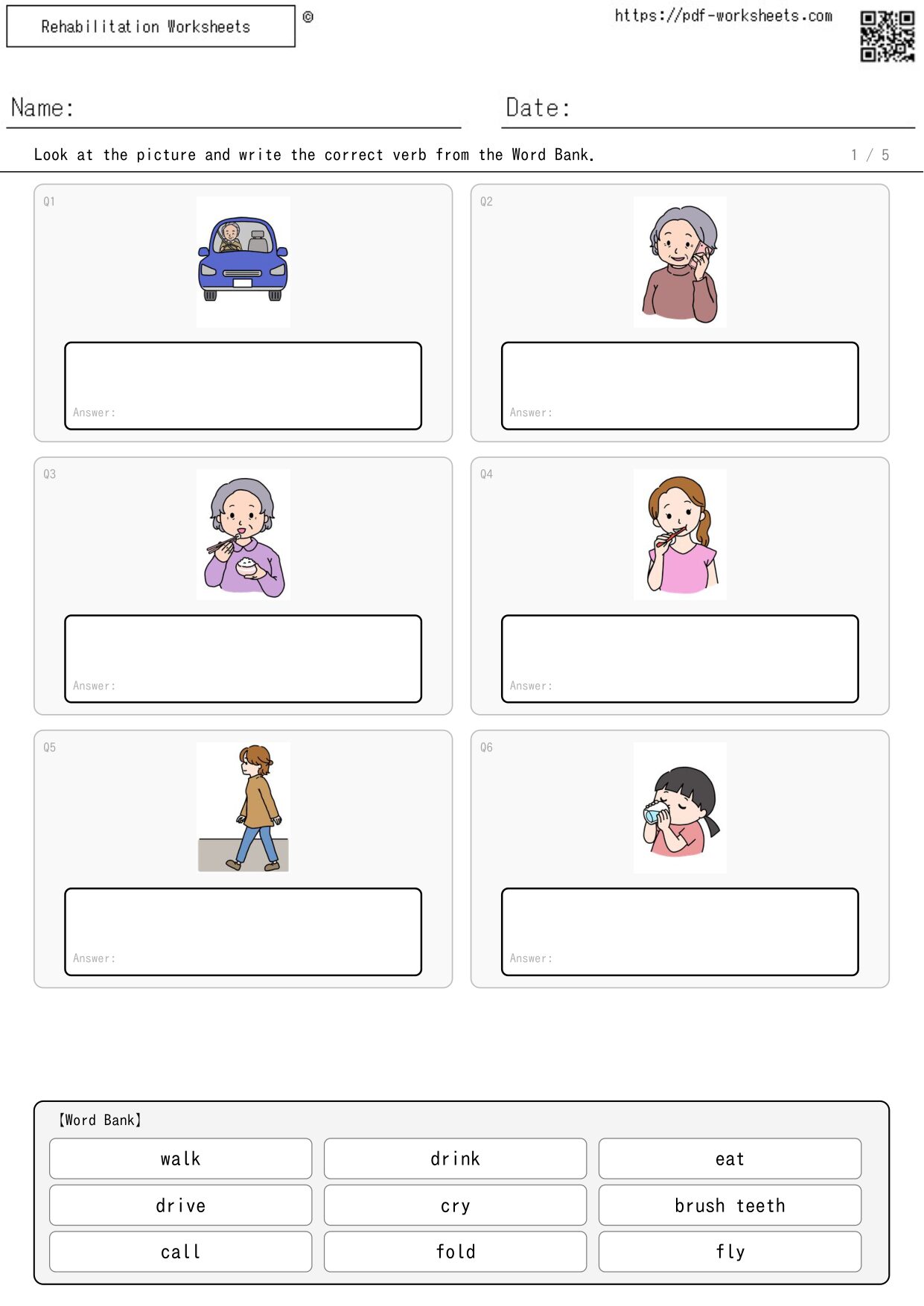
Task to look at the picture and write the correct verb in the blank (5 sheets)
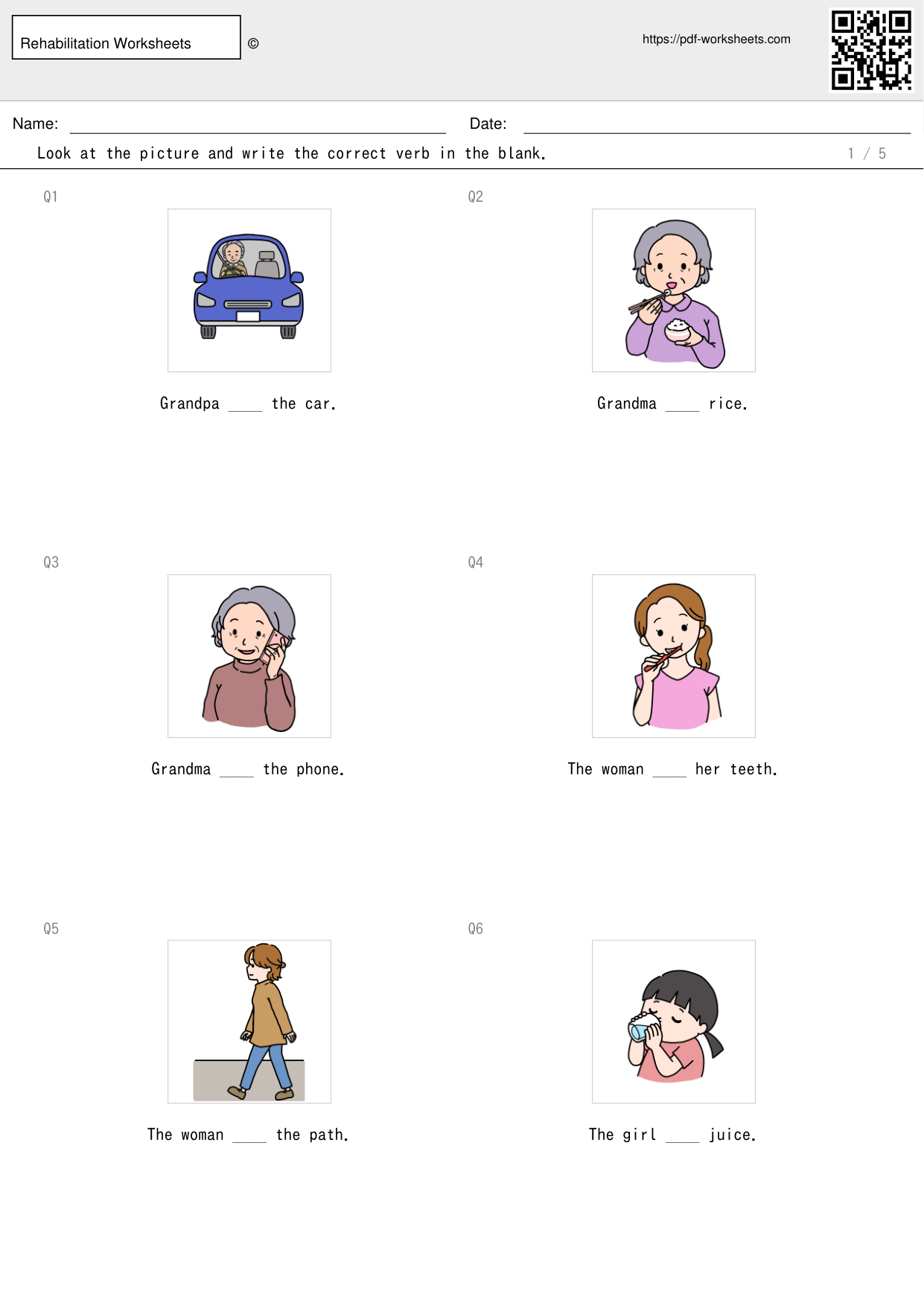
Think of the verb that completes the sentence
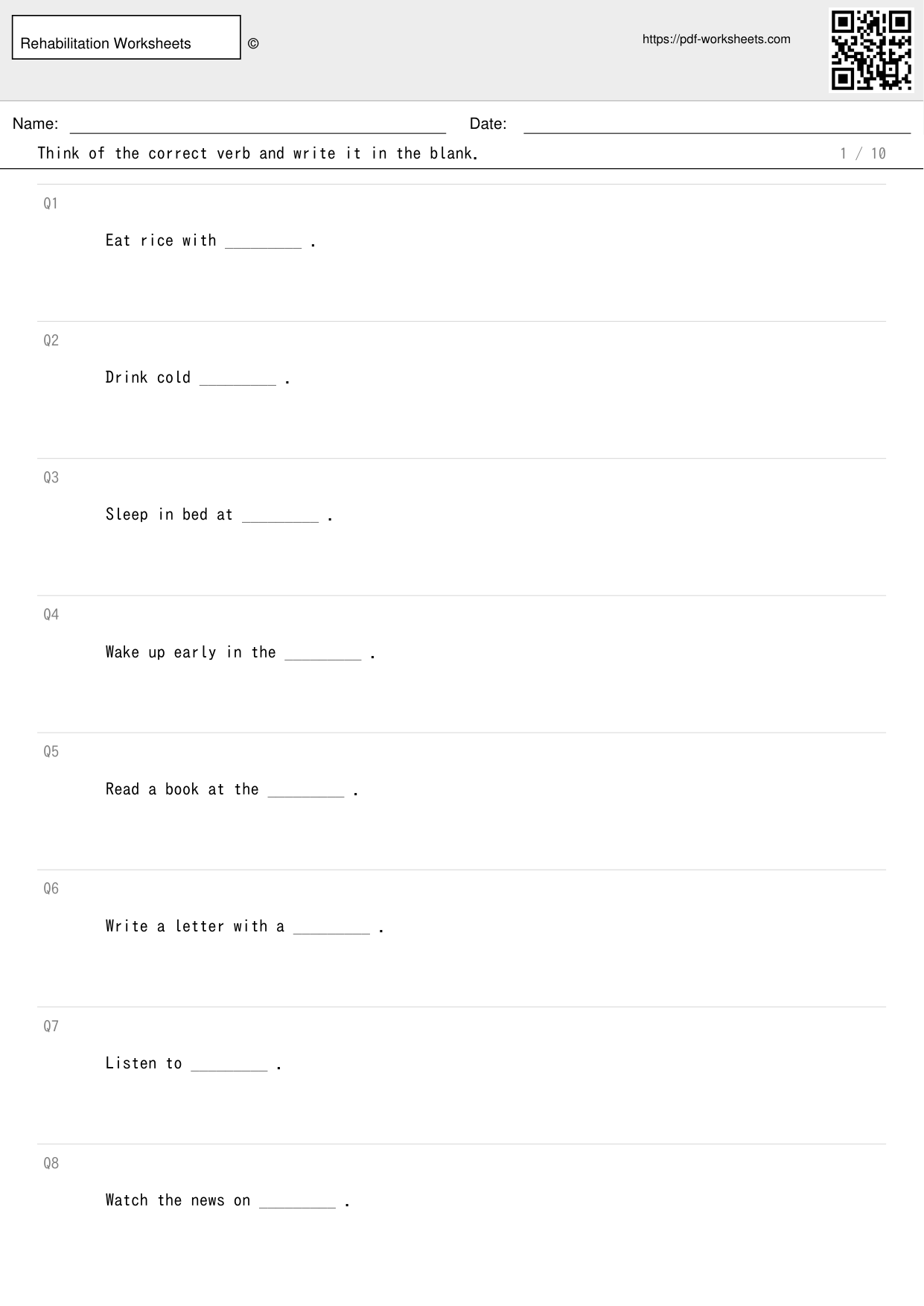
Read a sentence with a gap and write a verb that fits, with no picture to help. The meaning of the sentence is the only clue, so the verb has to be recalled.
Task to think of the correct verb and write it in the blank (10 sheets)
Write the opposite verb
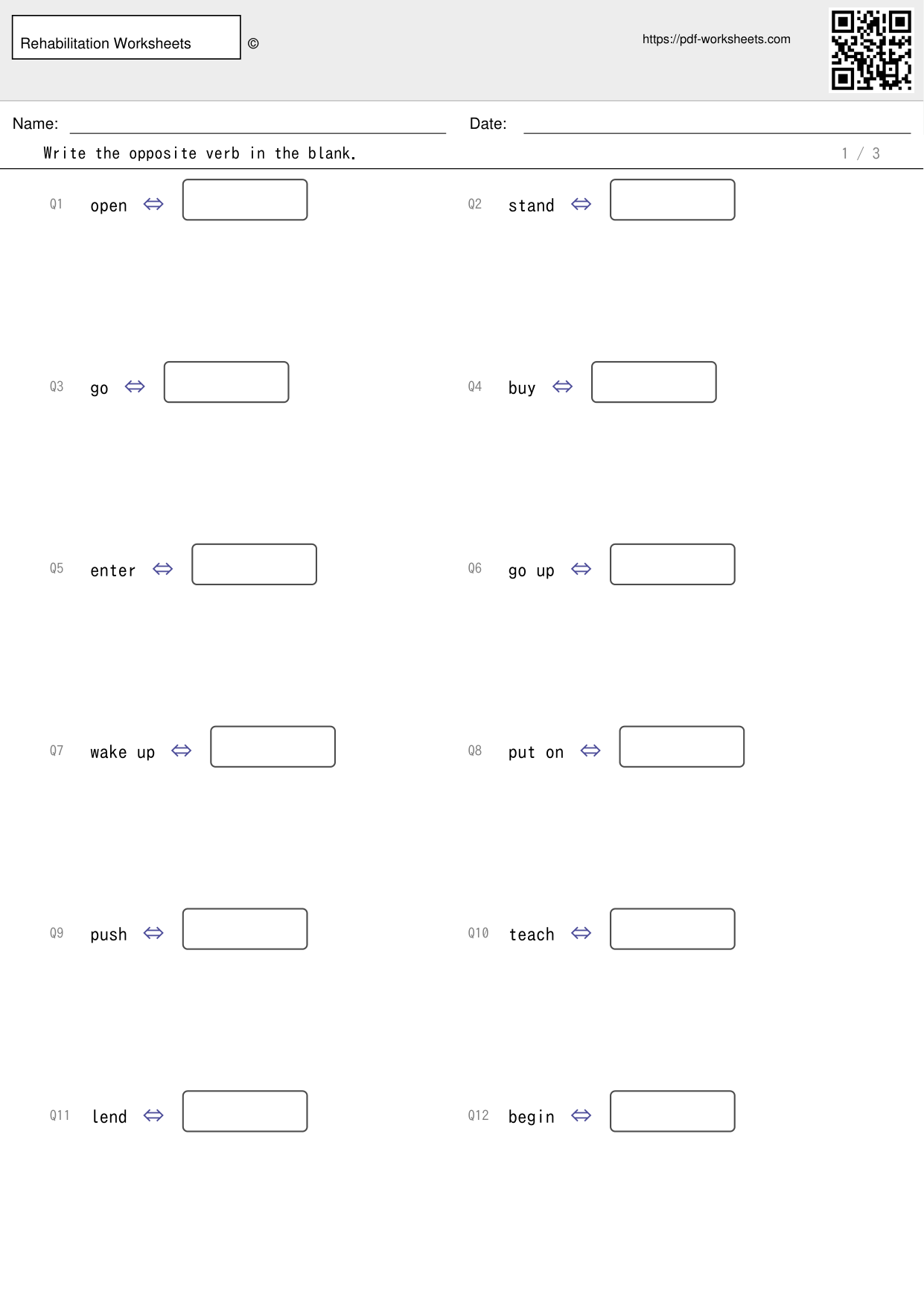
Write the verb that means the opposite of the one given. This is a step up from choosing, since the word has to be recalled rather than recognised.
Task to write the opposite verb in the blank (3 sheets)
Write a sentence for the picture
Look at the picture and write a sentence that describes it. Beyond the verb itself, this asks for a complete sentence — who is doing what — and rounds off the writing tasks.
Task to look at the picture and complete the sentence (5 sheets)

Change the form of the verb
Change “eat” into “ate” or “is eating.” Distinguishing tense and aspect is essential for everyday conversation.
Change the verb to the past tense form (5 sheets)
Change the verb to the present progressive form (5 sheets)
Comments